
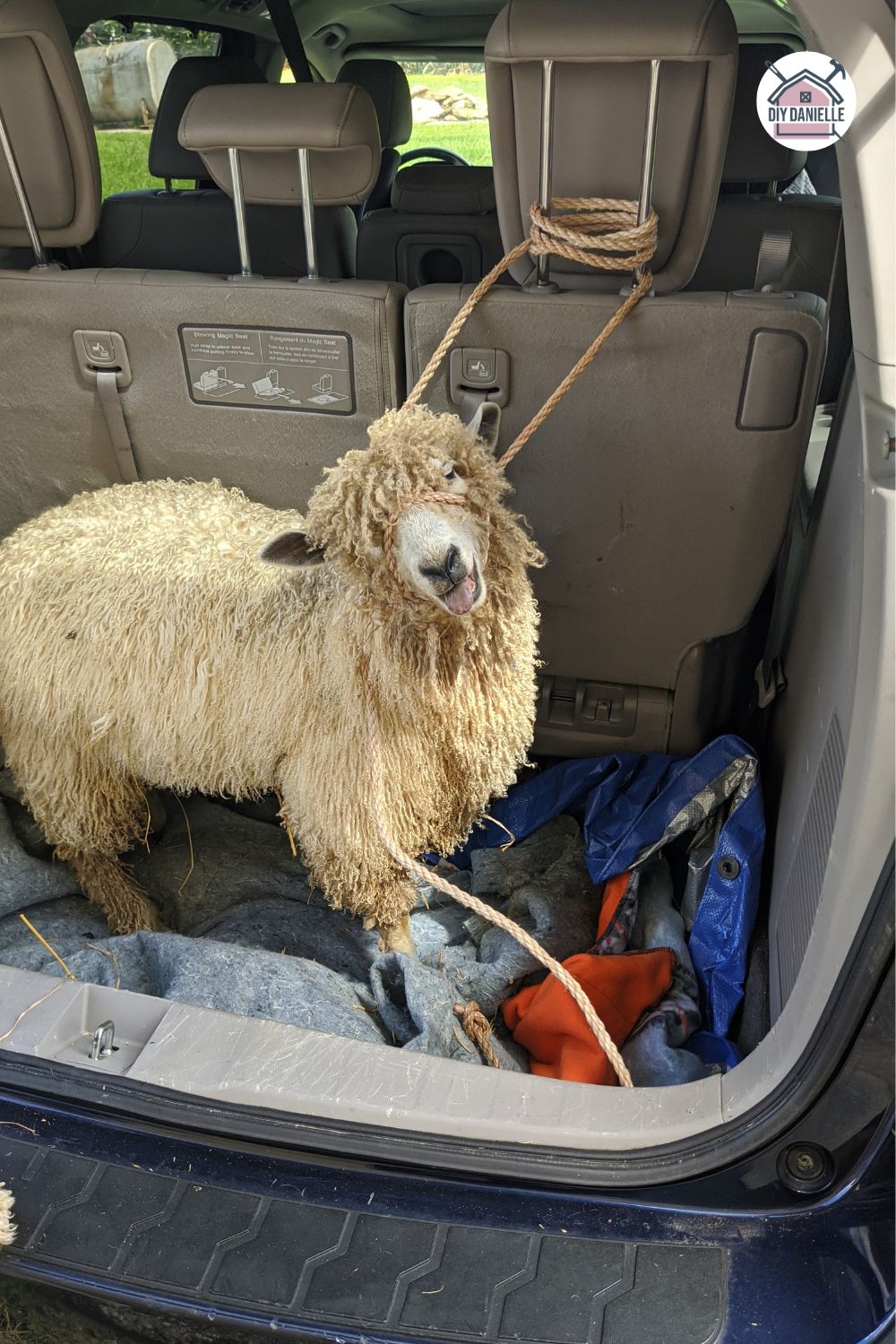
Learn safe and stress-free ways to transport livestock in a minivan. Step-by-step tips for keeping animals comfortable and secure on the go.
I have gotten to the point where transporting livestock in the back of my minivan is a bit of an art. I try to make it the least amount of work for me to clean up when I get home.
And I love the look in people’s faces when I pull in to pick up sheep or goats with a minivan. It’s entertaining.
While I don’t think I could fit a horse or larger animals in the back of the van easily, it really is quite ideal for transporting one or two smaller animals.
This video was one that I never published from when I brought my first sheep home 5+ years ago.
The first thing you want to do before you leave is get your car detailed. That will guarantee that you are extra careful bringing these animals home. (Joking)
This post may contain affiliate links which may earn me commissions should you click through them and take certain actions. As an affiliate for Amazon, Cricut, xTool, Home Depot, and other sites, I earn from qualifying purchases. Please DIY carefully. View my full legal disclosures here.
The majority of my content is generated by me, as are 99% of the photos and videos, but I utilize technology for titles, descriptions, video editing out all of my ums, and occasionally for text overlay on images.
Please read the whole post so you don’t miss any important information!
How to Transport Livestock in a Minivan
Project Supplies
- Minivan Trunk Liner Mat: https://amzn.to/4nipF5k — these are worth the investment!
- Tarp
- Absorbent fabric: towels, furniture covers, etc. You want something in there to absorb any urine.
- Something (and ideally someone) to tie the animal/hold the animal in while the back door closes
- Feed Bags (empty)
Step by Step Instructions
Step 1: I start by lining my minivan trunk with feed bags. These do a pretty good job protecting the floor, although I do prefer a minivan trunk liner mat. Getting one of those was a game changer. It also doesn’t shift as much as the bags will.
Step 2: Next I put down a tarp and some type of absorbent fabric. Old towels or furniture covers will work well here.
Step 3: You’re pretty much set at this point, but it is necessary to have someone else there to help. I find it really difficult to get the trunk door closed without an animal trying to hop out. Sheep and goats are not known for their intelligence and you don’t want to have them tied up back there. They will hurt themselves.
I prefer to use the tie and halter just to get the door closed and then I untie them by crawling through the car.
Usually I take a helper to hold them from the backseat in the trunk area while I shut the door and make sure no one jumps out.
Once the door is shut, I’m usually golden for the rest of the trip. And by Golden I mean someone is definitely going to pee in the car.
And there’s going to be a lot of crying because they want to make sure you understand they are not excited about their road trip.
I like the animals to have a nice enclosed and quiet space so they don’t shift around too much. The more an animal shifts, the more they freak out. So I like how small the trunk is in the van.
I compare it to being on a roller coaster. You really do want to be tied in and it gives you a sense of security, even if you are flying through the air and twisting around. If they put you in a big box and just shook you around for the whole ride, you probably wouldn’t be back to the amusement park.
You’d also more than likely get very injured.
I also put the headrests up as high as possible in the back of the minivan so the animals don’t jump over the seats. I generally don’t have issues with livestock but my dogs will definitely pop over if they’re motivated.
Crates are ideal for transporting if you have big enough ones. I do not have big enough crates for most sheep and many goats.
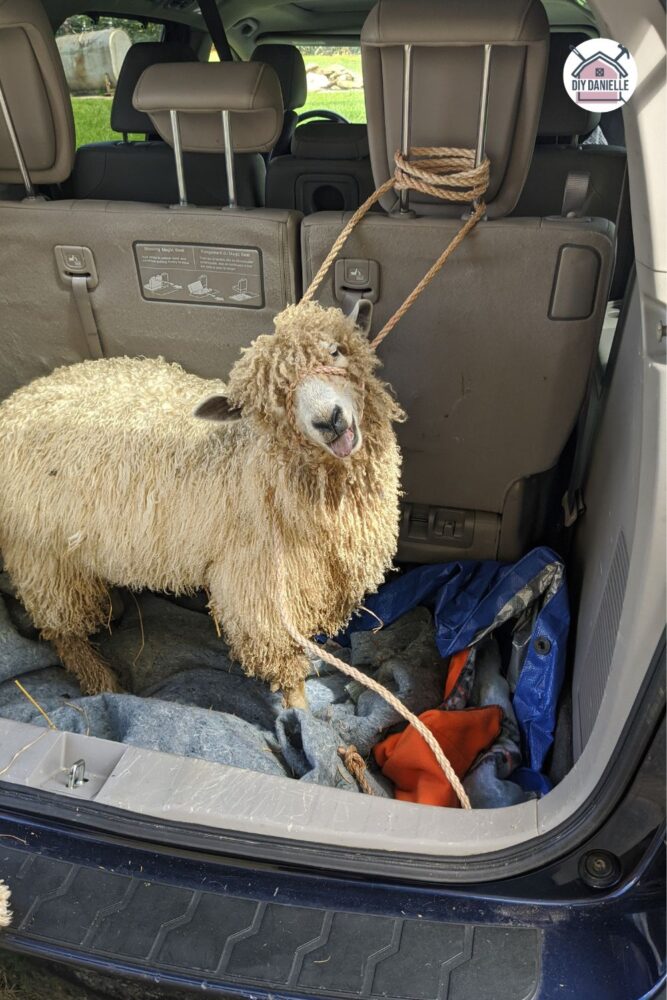
Step 4: Once you get home, you can back the minivan up to your pasture, open your gate, back in, and open the back of your van. Your animal should be happy to hop out and visit their new friends in their field. I rarely have an animal not jump out of the car as quickly as possible.
Step 5: I immediately pull out all of the liners and shake everything out in the pasture.
Anything washable goes in the washing machine- all solids must get off the washable items before going in the wash. Pee washes out- solid poo and hay do not. If you hang the washable mats over a fence, you can use a broom to brush off all of the stuff you don’t want in the washing machine.
Anything that I can rinse down just gets rinsed by the spigot.
It really is pretty easy, although I haven’t needed to transport any animals longer than an hour. I prefer not to do that to myself. Getting in and out, and taking animals for a drink of water and to walk would be quite the obstacle.
I have had really really good luck doing it this way and while certainly it’s not perfect, I just cannot afford a trailer at this point or a vehicle big enough to pull it.
Eventually I would like to get a vehicle that can pull a horse trailer but I haven’t found anything that is in the right price range at this point.
I have my doubts that prices will ever drop to a point where I’m financially comfortable with the cost of a truck and trailer. Which is why I’m driving a car with 114,000 miles on it. There’s something that really keeps you hanging on when you know that you can’t afford a car that can trailer horses at $80,000+ plus the trailer itself. And you know that a minivan is your second best option. And those aren’t cheap either. And I feel a lot better about putting sheep and goats in the back of a minivan that is over 10 years old versus a brand new car.
Please share and pin this post! You can also post your project and tag the DIYDanielle team on Instagram @doityourselfdanielle!
