Learn how to easily collect seeds from your garden plants to save, share, and grow your favorite varieties year after year.
Welcome to the wonderful world of seed collecting! If you love gardening, collecting your own seeds from flowers not only saves money, but it’s fun! I love sitting with my sons to help pull out seeds to save for the following year.
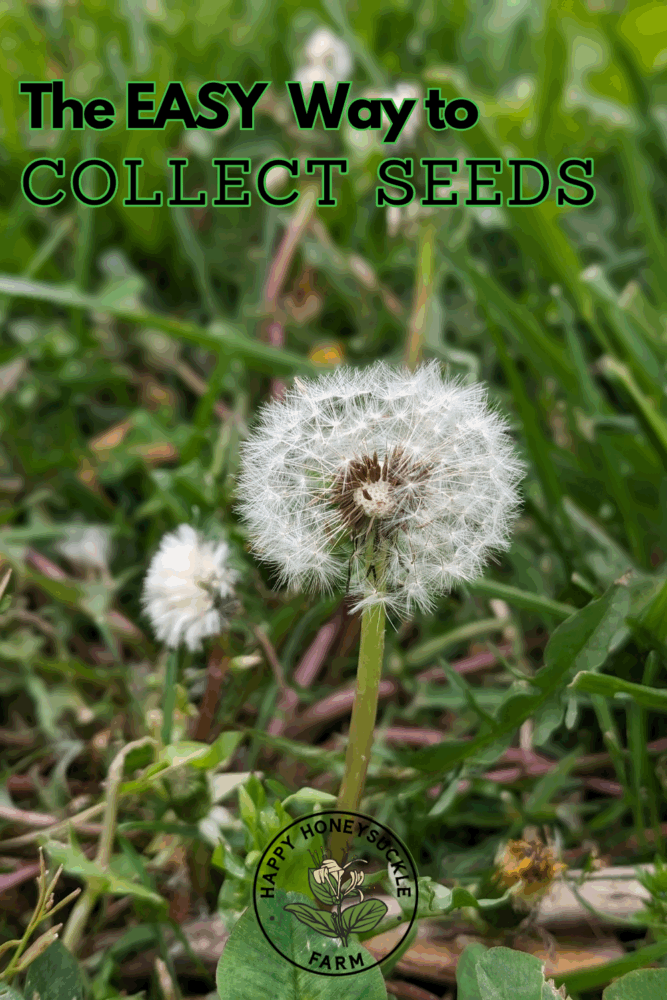
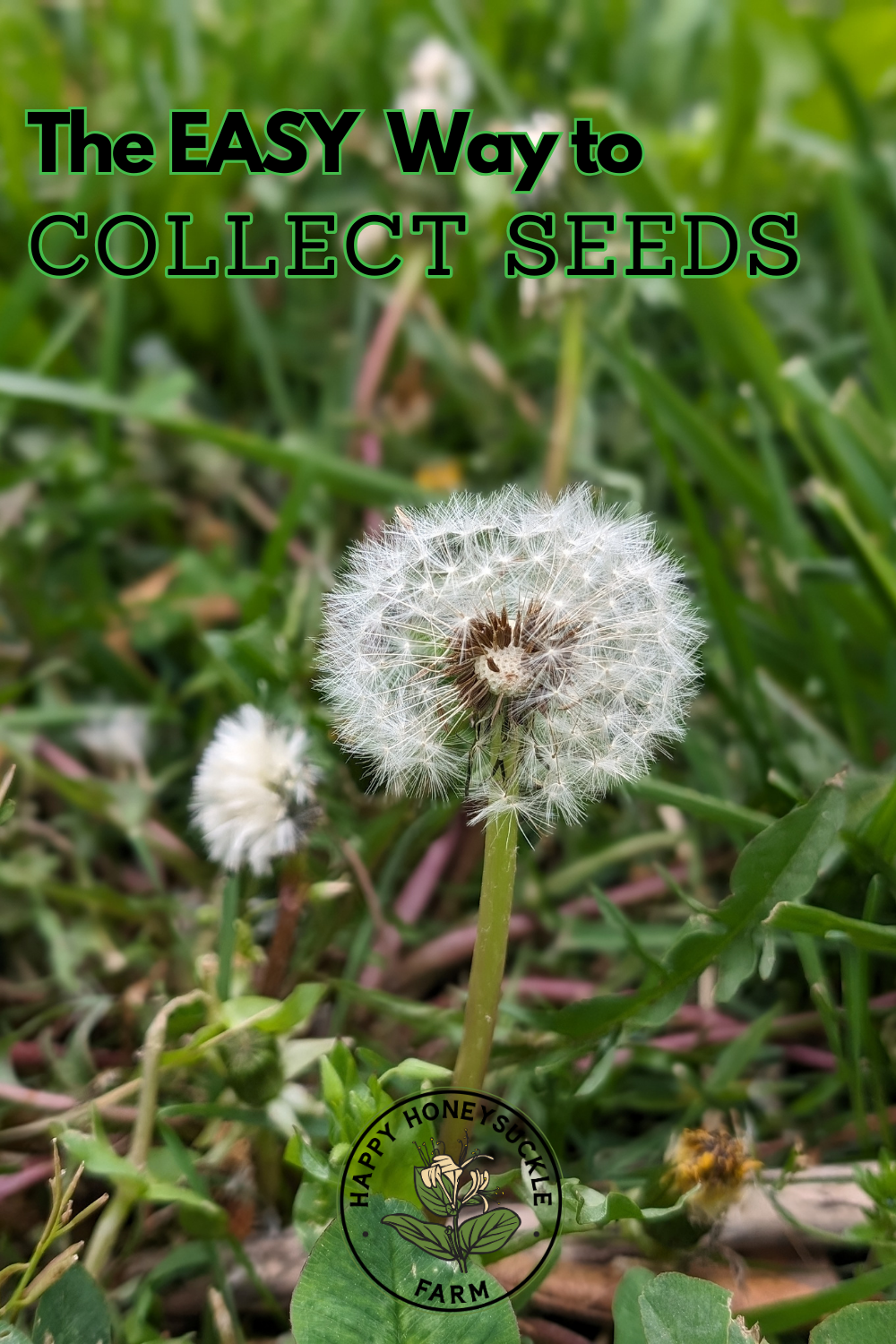
Today I’m going to talk about the easiest way I’ve found to collect seeds from flowers that spread via airborne seeds like dandelions, milkweed, thistles, cattails, asters, and daisies.
These plants spread in the wind. The flower dies and dries up, developing seeds, and then the wind carries the seeds away. Plants like dandelions have a pappus which is the tuft of hairs that help them float through the air.
You may want to collect these for next year’s garden- or collect and kill the seeds to keep an invasive plant from spreading.
This post may contain affiliate links which may earn me commissions should you click through them and take certain actions. As an affiliate for Amazon, Cricut, xTool, Home Depot, and other sites, I earn from qualifying purchases. Please DIY carefully. View my full legal disclosures here.
The majority of my content is generated by me, as are 99% of the photos and videos, but I utilize technology for titles, descriptions, video editing out all of my ums, and occasionally for text overlay on images.
Please read the whole post so you don’t miss any important information!
Why Collect Seeds?
Collecting seeds is rewarding for many reasons:
- Cost-effective: Save money on buying new seeds or plants each season.
- Preservation: Keep growing your favorite varieties, even those that are rare or heirloom.
- Adaptation: Seeds from successful plants adapt to your garden’s unique conditions over time.
- Sharing: Swap seeds with friends or participate in community seed exchanges.
You can also choose to collect seeds from invasives and/or weeds to keep them from spreading. If you carefully collect the seeds, it might be an easier method to remove the weed than by pulling.
I’ve found that when I pull weeds that are grown and ‘gone to seed’ then the seeds spread while I’m collecting them. This keeps the weed in my garden and means extra work for me.
Choosing Flowers
If you’re collecting seeds for next year’s garden, start with healthy, vibrant flowers. It’s best to collect seeds from the strongest and most vigorous plants in your garden because this helps ensure genetic strength and resilience in future generations.
Don’t collect from plants that aren’t healthy.
Best Time to Collect Seeds
Timing is crucial in seed collection. Wait until the flowers are mature and have started to fade or dry out. When the seed pod starts to dry out, you’ll notice that eventually the seeds begin to float away in the wind… the time to collect them is NOW… before the wind does the job for you!
In some cases, you may want to collect seeds from weeds BEFORE you pull the weeds. This prevents you from accidentally releasing all of the seed pods during the weeding process. I have a clever way to do this which I’ll share below!
How to Collect Seeds: A Step-by-Step Process
- Identify the Seed Pods: After the flowers bloom, they will form seed pods. These pods vary in shape and size depending on the flower type.
- Wait for the Right Moment: Allow the pods to dry on the plant unless you’re in a very wet climate, which might cause them to mold. The pods should be brown and dry before you collect them.
- Harvest the Pods: Carefully cut or pick the pods from the plant. If you shake the pod and hear seeds rattling inside, it’s ready!
- Extract the Seeds: Open the pods over a bowl or paper bag to catch the seeds. Remove any chaff or pod material from the seeds.
- Dry the Seeds: Spread the seeds out on a paper plate or screen to dry for a few days in a cool, dry place. Avoid using paper towels as seeds may stick to them.
- Label and Store: Once dry, store the seeds in labeled envelopes or small jars. Include the name of the plant and the date of collection. Keep them in a cool, dry place until you are ready to plant next season.
For invasive plants, you can burn the seeds or dispose of them in the garbage. But keep in mind that some invasives use mild fire exposure to stimulate germination.
Tips for Success
- Avoid collecting seeds from hybrid plants, as their offspring might not reproduce true to form.
- Be patient: Some seeds might not be ready to collect until well into the fall.
- Monitor your seeds while drying, especially in humid climates, to prevent mold.
When SHOULDN’T You Collect Seeds: Legally and Ethically
There are certain situations where it is not legal to collect seeds.
1. Protected Areas and Private Property: Generally avoid collecting seeds from private property or protected areas unless you have permission.
2. Endangered Species: It is illegal to collect seeds from endangered or threatened plant species. Such laws are in place to protect these plants from extinction. The Endangered Species Act in the United States, for example, prohibits the collection of endangered plant materials without specific authorization.
4. Plant Breeders’ Rights: With hybrid and special commercialized seeds, the person who created the seeds may have legal control over the propagation of these plants, including collecting and growing from seeds. Seeds from these plants often come labeled with notices about their propagation rights. These seeds have often been carefully created over time and selective ‘breeding’ to improve disease resistance, etc. EVEN IF YOU BOUGHT THE SEED PACKET, you still aren’t supposed to collect the seeds from your own plant. I know… it seems a little silly when you could just let them repopulate themselves if you didn’t clean up your garden… but it is intended to protect the person who developed the seeds. And I personally like the idea of supporting a small farmer or seed business when the seeds come from them.
Heirloom seeds are safe for collecting seeds. An heirloom seed refers to seeds from plant varieties that have been passed down through several generations, typically within a family or community, due to their valued characteristics. Unlike hybrid seeds, which are the product of crossbreeding between different varieties to create specific traits, heirloom seeds come from plants that reproduce naturally and have stabilized traits over time.
I usually opt to buy heirloom seeds when I purchase seeds because I don’t want to keep track of which plants I can and cannot collect seeds from.
The BEST Way to Collect Seeds: It’s EASY and FAST!
While I usually would cut or pull off the pods with the seeds, or pull off the seed head to store in a container or baggy, this year I discovered an AWESOME trick. USING AN AIR/KEYBOARD VACUUM! This helps keep the seeds from flying everywhere while you’re picking them. It works SO well!
I used them to collect dandelion seeds which I grow for my guinea pigs. I may also opt to try this for some of the invasives that I’ve struggled to control in my garden.
Helpful Tools:
- Air/Keyboard Vacuum: https://amzn.to/3J1mwIx…this one has a feature where you can reverse the flow so I’m thinking it might be better than mine. I am wondering if I could blow the seeds out and into a container with this one (possibly not due to the filter). If you try it and it works, let me know!
- Garden shears: https://amzn.to/47lHfi2
- Old prescription bottles or upcycled glass jars with lids.
- Garden Scissors: https://amzn.to/3KWDqbX
Here’s a video on how to use the vacuum to collect seeds!
Get Planting!
Now that you’ve collected your seeds, plan your next season’s garden! Seed collecting not only connects you more deeply with the cycle of nature but also enhances your gardening experience by making it more sustainable and personalized.
Happy gardening and seed collecting! May your garden flourish with the beauty of flowers you love most.
Please share and pin this post! You can also post your project and tag the DIYDanielle team on Instagram @doityourselfdanielle!