Discover the top benefits of growing elderberry in your garden. Learn how this versatile plant supports wellness, attracts pollinators, and enhances your landscape.
Elderberries are one of my favorite plants in my garden: they’re easy to grow, produce beautiful white flowers, and attract pollinators like bees and hummingbirds. I have several outside of my barn office and I love watching the birds, particularly hummingbirds, that visit the bushes.
Once cooked, both the berries and the flowers are edible. You can make kombucha, teas, and syrups with your harvest. My favorite is elderflower cordial which I use to flavor water.
OH! And the deer don’t seem to like them!
This post may contain affiliate links which may earn me commissions should you click through them and take certain actions. As an affiliate for Amazon, Cricut, xTool, Home Depot, and other sites, I earn from qualifying purchases. Please DIY carefully. View my full legal disclosures here.
The majority of my content is generated by me, as are 99% of the photos and videos, but I utilize technology for titles, descriptions, video editing out all of my ums, and occasionally for text overlay on images.
Please read the whole post so you don’t miss any important information!
Here’s why you should grow elderberry in your garden:
Aesthetic Appeal
Elderberry plants are a beautiful addition to any garden.
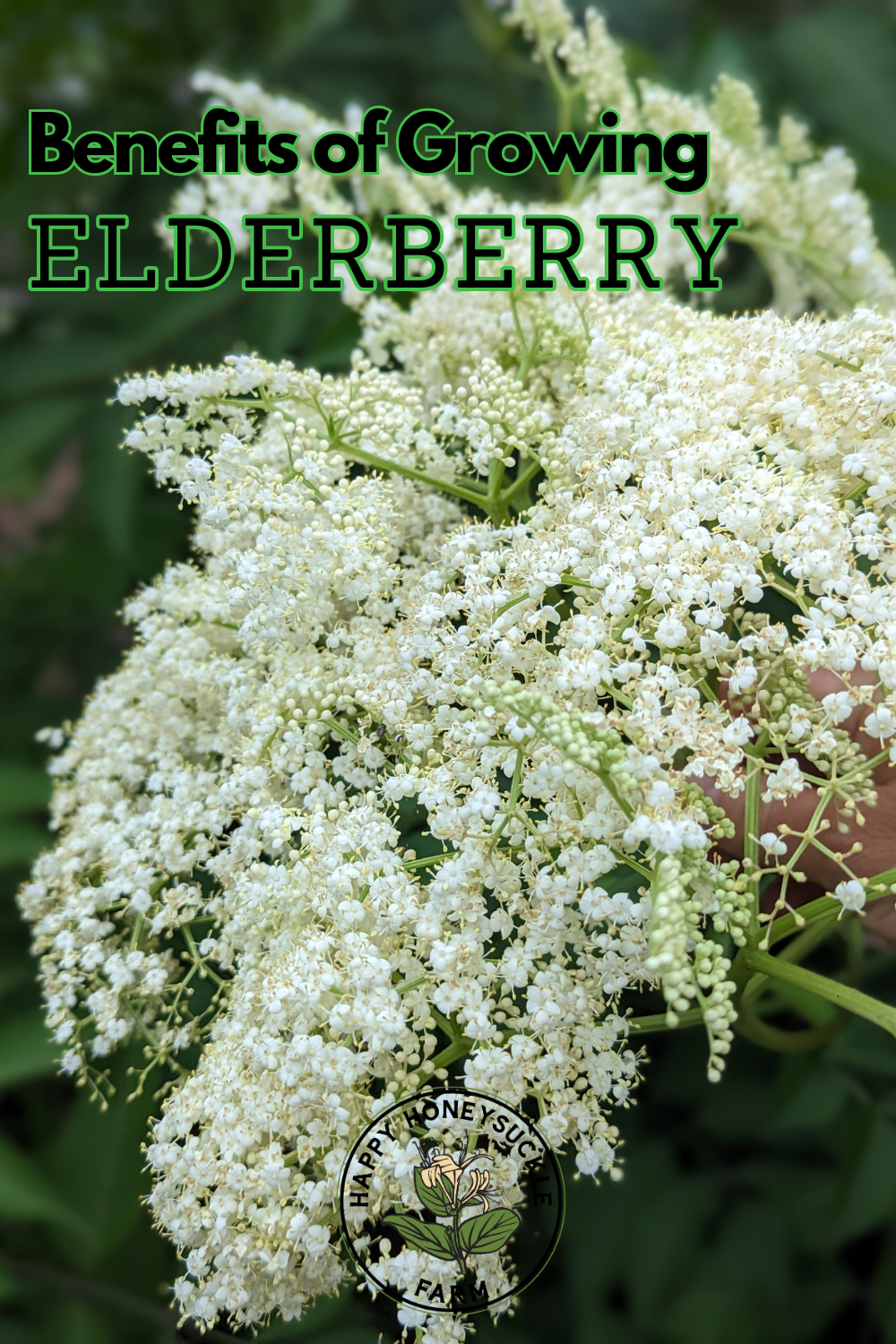
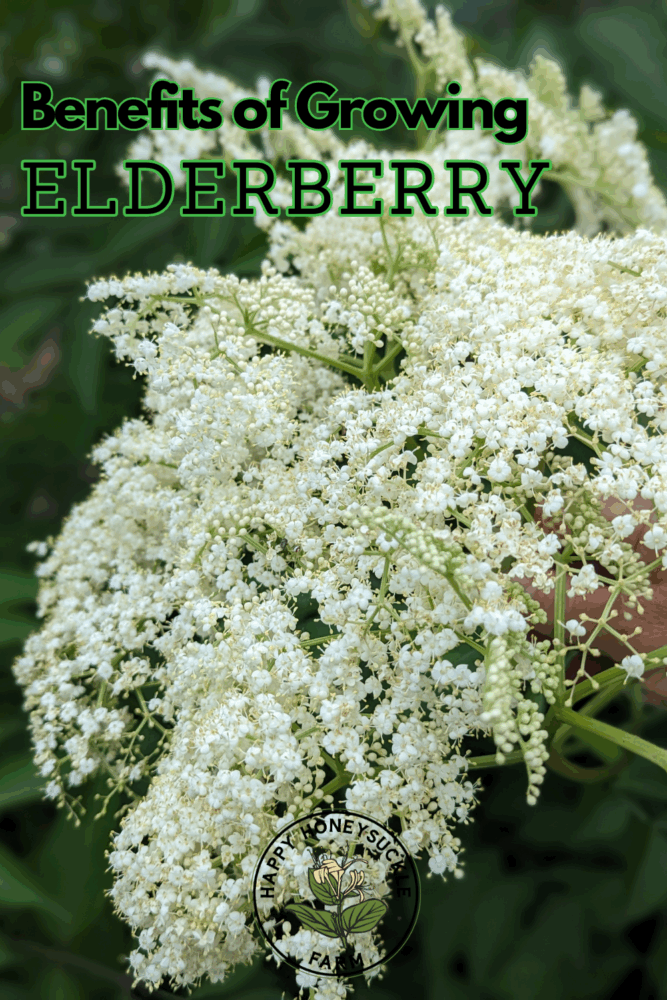
In early summer, they produce clusters of tiny, white or cream flowers known as elderflowers. These fragrant blossoms not only add a lovely visual contrast against the lush, green foliage but also attract pollinators such as bees and butterflies, supporting the local ecosystem.
As summer progresses, the flowers give way to drooping clusters of dark purple-to-black berries, adding further visual interest and attracting birds.
I usually find a few clusters of flowers popping up in the later part of the season as well… but our weather in Maryland is tricky for plants.
In the Fall and Winter, many types of elderberry can be cut back closer to the ground if you don’t like the aesthetics of the canes without foliage.
Health Benefits
Elderberries are thought to have health-promoting properties. Packed with vitamins (especially vitamin C) and antioxidants, they are often used in syrups, teas, and other concoctions to boost immune system function, especially during cold and flu season.
Food Dye
Personally, we use elderberry occasionally to ‘dye’ other foods or drinks. I find dyes to be unnecessary most of the time, but mixing a few tablespoons of elderberry syrup into lemonade turns it a lovely pink. It also adds additional flavor.
Culinary Uses
The berries can be cooked into jams, jellies, and pies, or used to make wine and cordials.
Elderflowers are not only beautiful, but also edible; they are commonly used to make tea or the famous elderflower cordial, which serves as a base for various refreshing beverages and cocktails. I love making elderflower cordial to flavor water.
It’s important to note that in MOST CASES you should NOT eat elderberry raw. It will give you a bellyache. This is one of the reasons it’s so pest resistant.
Ease of Cultivation
Elderberry plants are hardy and adaptable, making them suitable for a wide range of climates and soils. They are particularly forgiving for novice gardeners because they require minimal care once established.
Elderberries thrive in full sun to partial shade and prefer well-drained soil, but they can also tolerate a lot of neglect once they’re well established.
While they LOVE water and it’s necessary to get them established, if you have a relatively decent climate without long periods of drought, it will probably thrive will very little effort on your part. I have simply stuck cuttings in the ground and they have taken off on their own.
My understanding is that they thrive when well watered and you may get larger berries as a result, although I think the berry size is largely dependent on what type of elderberry plant you have.
Wildlife and Ecological Benefits
Growing elderberries contributes positively to your garden’s ecosystem. The flowers provide nectar for pollinators, while the berries are a vital food source for birds.
Additionally, elderberry plants can improve soil quality and prevent soil erosion, thanks to their extensive root systems.
Medicinal Uses
Historically, elderberries have been used in folk medicine to treat various ailments. Modern research has explored their potential to alleviate symptoms of cold and flu.
While elderberries should not replace conventional medical treatment, I consider them an option that is generally low risk and tasty to add to our cold and flu season routine. I see this as similar to eating an orange each day for Vitamin C.
Other Uses
The wood from the elderberry can be used for crafts, and some people use the leaves or wood to help ward off pests like flies. I’m going to try hanging the cuttings in my barn to see if it helps with flies this summer.
Economic Advantage
With the growing popularity of elderberries in health products, cultivating your own elderberry plants can offer significant savings over purchasing commercial elderberry products, which can be pricey. Furthermore, if you have extra elderberry, you could even consider selling your surplus berries at local markets.
Considerations Before Planting
While elderberries are relatively easy to grow, it’s important to note that raw elderberries, their leaves, seeds, and stems are toxic and should not be consumed without proper preparation.
Always cook elderberries before use, and be mindful of where you plant them if you have children or pets. However, I’ve found that my chickens leave the plants alone, although they often hide in the shade of the elderberry. The actual berries are mostly out of reach and they don’t seem interested in them.
Where wild birds seem to occasionally eat the berries, I anticipate that birds can tolerate the raw berries better than mammals.
Also- understand that the reason that pests leave this plant alone is because it SMELLS BAD. It’s not particularly bothersome to me (and I’m sensitive) most of the time, but when I need to pull tiny seedlings up or prune the plant, I prefer to use gloves so the smell doesn’t stay on my hands all day. It’s not the worst smell (Tree of Heaven takes that award), but I just don’t love it.
Getting Started
To start growing elderberries, choose a variety suited to your local climate and soil conditions. You can start with cuttings in early spring, planting them in moist, fertile soil.
Elderberries do well with about an inch of water per week and some basic fertilization during the growing season.
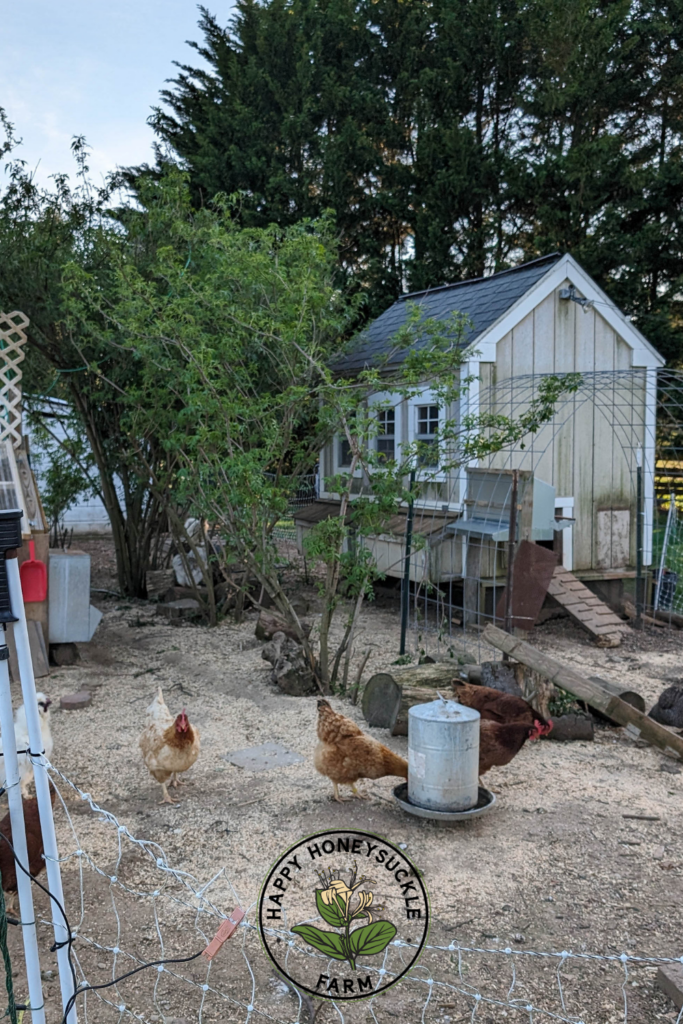
We put our elderberry next to our chicken coop and, as we clean the coop out, we toss dirty bedding in that area. The elderberry bushes seem to thrive in this space… it probably doesn’t hurt that the chickens will dig around, eat bugs, and fertilize that area themselves.
The chickens love having a good cover over them for shade in the summer and there never seem to be many bugs around that area thanks to the elderberry.
Just keep in mind that elderberry sends off suckers that can QUICKLY take over a garden. My elderberry on the hill beside my barn have been much easier to contain because the elderberry has the barn on one side, comfrey in front of it, and then a hill of grass in front of that. The comfrey and elderberry can live their best lives in their current home, but any attempts to take over result in them getting mowed down.
This has been a lot more manageable for me than the ones in my garden. Those require hand pulling due to their location. While relatively easy to pull up IF you pull them up when they’re young, they have EXTENSIVE root systems. When weeding the extra seedlings, I’m always careful to pull the root sucker to the base of the parent plant- at least as much as possible. It’s pretty interesting to see though!
In theory, elderberry can also spread by seed, but I haven’t seen any popping up in weird places so I anticipate that this is a far less common (and successful) form of growing them.
Conclusion
Incorporating elderberry plants into your garden not only enhances its beauty and biodiversity but also offers you a direct source of nutrition and potential health benefits.
With all of the benefits that this plant offers, they’re a great option for every garden or landscape.
Please share and pin this post! You can also post your project and tag the DIYDanielle team on Instagram @doityourselfdanielle!